In 2003, I stood in Sekondi, in Ghana’s Western Region, reporting for the BBC on the line to London, where my fellow journalist Ben Dotsei Malor was anchoring the programme. More than two decades later, that recording found its way into Episode 6 of Every Thread Has a Name. It reminded me of something I have known since my years in radio: a voice carries what writing alone cannot.
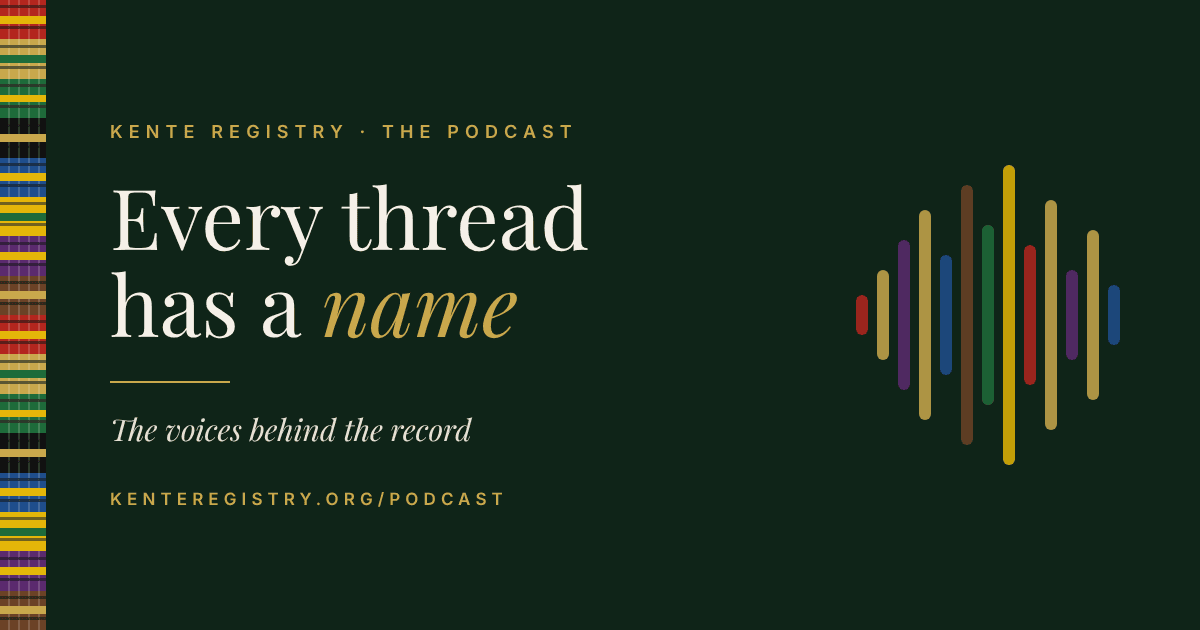
Kente Registry exists to create a permanent, public record of Kente weavers and their cloth. Every Thread Has a Name, the Registry’s podcast, gives those records a voice.
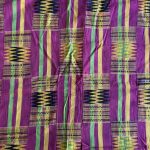
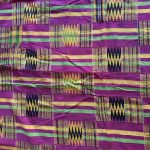
Kente is often recognised through its colours, patterns and symbolism. But behind every cloth is a person who made it, drawing on knowledge, skill and choices shaped by a particular tradition and community. The podcast is a spoken companion to the Registry’s work: a place to understand how the Registry came to be, to explore the ideas and responsibilities behind documenting Kente and, increasingly, to hear from the people who make it.
Why a podcast?
Long before Kente Registry existed, I was a journalist. Again and again, I heard weavers explain the origins and meanings of their designs, and I found that much of what they told me was recorded almost nowhere else.
In Ghana, so much knowledge has long been passed on by word of mouth, at the loom and around it. A written record can preserve names, places, techniques and design histories with care. But it cannot convey the sound of a weaver describing their work in their own words, or the emphasis and detail that come out in conversation.
Audio can also travel where a written entry may not. It can be listened to at home, on the road, or shared with someone who wants to learn more. The episodes are free to hear, and the Registry’s records are free to explore.
The podcast and the Registry, together
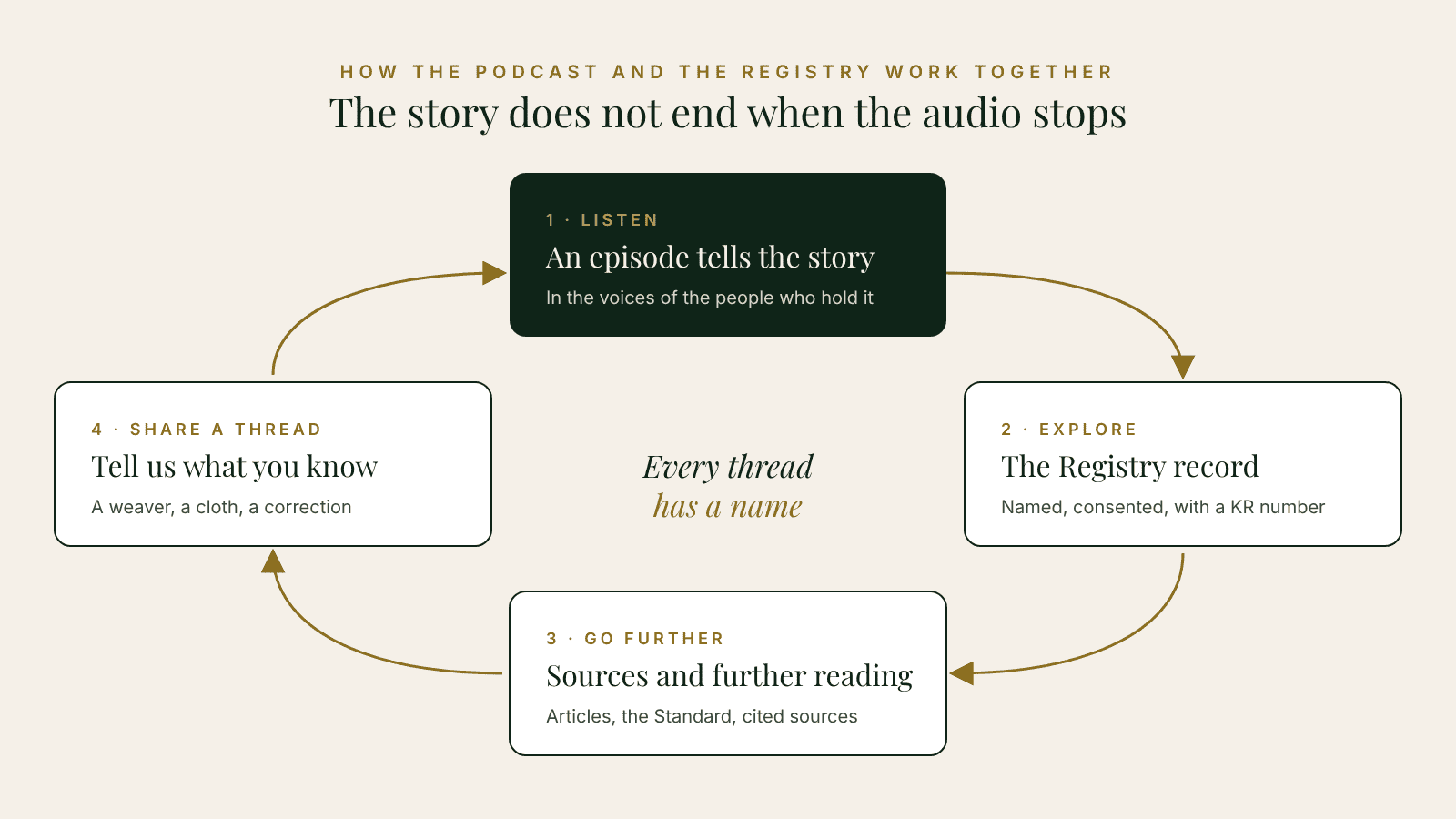
The podcast and the Registry are two parts of the same effort. A written record can be searched, cited and revisited. An audio account adds voice, context and presence.
The idea is simple: the story should not end when the audio stops. Each episode points listeners to the related records and further reading on KenteRegistry.org. And as the archive grows, someone who finds a weaver’s record will increasingly be able to hear more of that person’s own account.
What the episodes contain
The podcast began with the foundations. In the opening episodes, I explain what Kente Registry is and why it exists, how an idea became an institution, and the principles and safeguards that guide our work.
So far, listeners have heard from the people who helped establish the Registry: its founding directors, and supporters who opened doors when it was still very young. We discuss the practical questions behind building a trustworthy public record: who makes decisions, how the organisation is accountable, and how we respect the people and communities whose knowledge we document.
In the episodes ahead, the series will turn more and more to the weavers and their cloth: their practices, the meanings and histories of particular designs, and how information is researched before it becomes part of the public Registry.
The show also explains developments in the Registry’s work. When we discuss an institutional decision or milestone, we aim to do so plainly and to point listeners to the relevant public information.
Episodes so far
- What is the Kente Registry, and why? (24 October 2026)
- From a project to an institution (25 October 2026)
- A charity, and what that means (27 October 2026)
- The people and the rules (29 October 2026)
- Building the Foundations to Preserve Kente for All Time (2 November 2026)
- From an Idea to an Institution, and the People Who Opened the Door (6 November 2026)
The principles behind the show
The podcast follows the same commitments that guide the Registry.
Consent. We seek agreement before sharing someone’s story or voice. Participation should be informed and voluntary.
Attribution. Kente should not be treated as anonymous heritage. We aim to credit the weavers and communities connected to the cloth and the knowledge being discussed.
Stewardship. The episodes support the Registry’s longer work of documenting and preserving knowledge. They complement the written records; they do not replace them.
Openness. The podcast and the Registry’s records are available to the public. Our aim is to make this work accessible, not to hold stories behind a paywall.
These principles shape what we publish and how we publish it. They also remind me that documenting Kente is a responsibility. Kente Registry is a steward of the records it holds, not the owner of Kente or its traditions.
Listening
Every Thread Has a Name: The Kente Registry Podcast is hosted by me, Phillip Nyakpo, founder of Kente Registry. You can listen on the Kente Registry website, or follow the show on Spotify, Apple Podcasts or YouTube.
New episodes are released when there is another thread worth following: a weaver’s story, a cloth or tradition to explore, or a development that helps explain the Registry and its work.
Do you know a weaver whose story should be heard, or a cloth with a history worth telling? Write to us at info@KenteRegistry.org, or send a message or voice note on WhatsApp to +61 494 789 082.
The measure of the podcast is not reach alone. I hope it helps listeners hear the people behind Kente, find the records that preserve their contributions, and understand why those contributions deserve to be remembered.
Every thread has a name. This podcast exists to help make those names heard.