
Heritage. Identity. Honour. Recognition. These are not just words; they are the threads from which civilisations are woven.
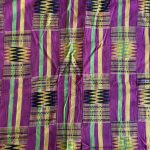
There is a cloth so vivid, so deliberate in its geometry, so layered in meaning, that wearing it has always been an act of communication. Kente, the resplendent hand-woven textile of the Ewe and Ashanti people of Ghana, does not simply drape the body. It speaks. Each colour declares an emotion or a truth: gold for royalty and wealth, green for renewal and growth, black for maturity and the spiritual energy of the ancestors, white for purity and purification. Every pattern carries a name, a proverb, a story reaching back centuries. To wear Kente is to wear history.
But history, when left unguarded, can be stolen, diluted, or forgotten.
This is precisely why the world needs the Kente Registry: a formal, structured, and globally recognised repository that documents, protects, and celebrates every pattern, weave, colour combination, and cultural meaning of Kente cloth. It is not merely an archival project. It is an act of justice. It is a declaration that African culture deserves the same institutional seriousness, legal protection, and global respect afforded to the artistic and intellectual traditions of other civilisations.
A Cloth Born of Royalty
To understand why the Kente Registry matters, you must first understand what Kente is.
According to Ashanti oral tradition, the art of Kente weaving was inspired by a spider’s web. Two young men from Bonwire, a small town in the Ashanti Region of Ghana, observed the spider Anansi weaving its intricate web and attempted to replicate the pattern using fibres from a palm tree. What began as imitation became innovation. They brought their creation before Asantehene Osei Tutu I, the first king of the Ashanti Empire, and Kente was born as a royal cloth, worn exclusively by kings and their courts.
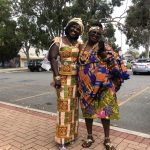
Over time, Kente evolved from royal exclusivity to cultural identity, but it never lost its ceremonial weight. It is worn at the most significant moments of life: births, outdoorings, puberty rites, weddings, graduations, funerals, and the enstoolment of chiefs. Each occasion calls for a specific pattern. A cloth worn to celebrate a new life is different from one worn to honour the dead. This is not aesthetics. This is a living language.
There are hundreds of distinct Kente patterns, each with a unique name and meaning. Sika Futuro means “gold dust” and symbolises wealth and prestige. Emaa Da, meaning “it has not happened before,” celebrates unprecedented achievement. Asasia is reserved for royalty. Adweneasa, meaning “my skills are exhausted,” represents the highest level of craftsmanship a weaver can achieve. These are not decorative choices. They are philosophical statements encoded in thread.
The Crisis of Cultural Erosion
Here is where the urgency lies: this extraordinary body of knowledge is under threat.
Mass production has flooded global markets with machine-made imitations of Kente: cheap polyester prints that mimic the visual aesthetics of the cloth while stripping it of every ounce of meaning. These imitations are manufactured in factories far from Ghana, often without the knowledge or consent of Ewe and Ashanti weavers, and sold at scale to consumers who are never told the difference. To the untrained eye, they look similar. To a Ghanaian elder, they are a desecration.
This is cultural appropriation in its most commercially aggressive form. And it has real consequences. The artisans of Bonwire and Adanwomase, the historic weaving towns of the Ashanti Region, who spend years mastering their craft, who inherit techniques passed down through generations of family knowledge, find themselves unable to compete economically with factories producing pale imitations at a fraction of the cost. The financial and spiritual injury is compounded: their heritage is being sold back to the world without attribution, without royalty, and without respect.
Meanwhile, documentation of authentic Kente patterns remains fragmented. Knowledge lives primarily in the memories of master weavers, some of whom are elderly. When a master weaver dies without having passed on the full meaning and technique of a rare pattern, that knowledge dies with them. Entire chapters of a civilisation’s creative history vanish quietly, with no obituary and no record.
What the Kente Registry Would Do
The Kente Registry would be a comprehensive, authoritative, and legally grounded institution with several interconnected purposes.
Documentation and Preservation. Every known Kente pattern would be catalogued with its name, its region of origin, its cultural meaning, its appropriate ceremonial context, and the weaving technique required to produce it. This would be done in collaboration with master weavers, chiefs, historians, and cultural custodians, not imposed from outside, but co-created by those who hold the knowledge. The result would be an irreplaceable archive, accessible to researchers, educators, designers, and future generations of Ewe and Ashanti weavers.
Intellectual Property Protection. Drawing on frameworks like Geographical Indications, the same legal tools that protect Champagne from France, Parmigiano-Reggiano from Italy, and Darjeeling tea from India, the Registry would establish that authentic Kente can only be described as such when produced by certified weavers using traditional methods in the regions of origin. This would not prevent the world from admiring or being inspired by Kente. It would simply ensure that authentic Kente is identifiable as such, and that imitations cannot masquerade as the real thing without legal consequence.
Economic Empowerment of Artisans. Certification would carry commercial value. Consumers who wish to purchase genuine Kente would know how to identify it. Institutions including universities, governments, fashion houses and designers, seeking to incorporate authentic Kente into their work would have a transparent, accountable pathway to do so in partnership with Ghanaian weavers rather than at their expense. This is not a closed system. It is a fair one.
Education and Global Awareness. The Registry would serve as an educational resource, helping the world understand what it is actually seeing when it sees Kente. In recent decades, the cloth has appeared at graduation ceremonies across the diaspora, in high fashion collections, in music videos, in political ceremonies. This visibility is a testament to Kente’s power. But visibility without understanding can collapse into spectacle. Education transforms spectacle into genuine appreciation, and genuine appreciation is what sustains a living culture.
Honour and the African Diaspora
The Kente Registry carries particular significance for the African diaspora.
For millions of people of African descent across the Americas, the Caribbean, Europe, and beyond, whose connection to their ancestral cultures was brutally severed by the transatlantic slave trade, Kente has served as a symbolic thread of reconnection. African American students have draped it across their graduation gowns for decades. Activists and artists have worn it as an emblem of pride and resistance. Politicians have wrapped themselves in it as a gesture of solidarity with African heritage.
This adoption of Kente by the diaspora is deeply moving. It reflects a hunger for rootedness, for belonging, for a tangible link to something that survived the devastation of history. The Kente Registry would honour that hunger by ensuring that what the diaspora reaches for is real: the cloth representing their reconnection to Africa is not a factory-produced simulacrum, but a genuine article made by the hands of Ghanaian artisans carrying forward an unbroken tradition.
In this sense, the Registry is not just a Ghanaian project. It is a global African project. It is a gift to every person of African heritage who has ever looked at a strip of interwoven colour and felt something ancient stir within them.
Why the World Needs It
The world needs the Kente Registry for the same reason it needs every institution that insists on truth in the face of erasure.
We live in an era of unprecedented cultural exchange and unprecedented cultural exploitation. The mechanisms that allow a corporation to trademark a pattern it did not create, manufacture a cloth it does not understand, and profit from a meaning it never possessed are sophisticated and entrenched. The mechanisms that allow communities like the Ewe and Ashanti weavers of Ghana to protect and profit from their own heritage are comparatively weak. The Kente Registry would begin to correct that imbalance.
It would also model something important for the world: that heritage is not sentimentality. Heritage is knowledge. Heritage is intellectual property. Heritage is the accumulated wisdom of generations of creative, spiritual, and philosophical labour. It deserves the same protection, the same documentation, and the same institutional respect as any other form of human achievement.
The Kente cloth has survived centuries of colonialism, cultural suppression, and commercial exploitation. It has crossed oceans. It has wrapped the shoulders of kings and activists and graduates and grandmothers. It has spoken when words were not enough.
The least the world can do is listen carefully and build the institutions that ensure it keeps speaking for centuries to come.
The Kente Registry is not just about cloth. It is about who gets to tell their own story, in their own words, on their own terms. It is time.