Tag: Ghanaian Heritage

  • The Language of Kente: Decoding the Patterns, Colours, and Their Meanings

    The Language of Kente: Decoding the Patterns, Colours, and Their Meanings

    Every strip of Kente is a sentence. Every cloth is a speech. To wear it without understanding it is to speak without knowing what you are saying.

    Imagine receiving a letter written in a language you do not speak. The letters are beautiful, the ink rich, the paper fine. You can admire the penmanship. You can recognise that something important has been written. But you cannot read it. Now imagine learning the language. Suddenly the letter transforms. What was surface becomes substance. What was pattern becomes meaning. What was admirable becomes profound.

    This is the experience of encountering Kente. For millions of people who see it, wear it, and celebrate it, Kente is a beautiful object. But for the Ewe and Ashanti people of Ghana who created it, Kente is a text, dense with vocabulary, rich with grammar, specific in its declarations.
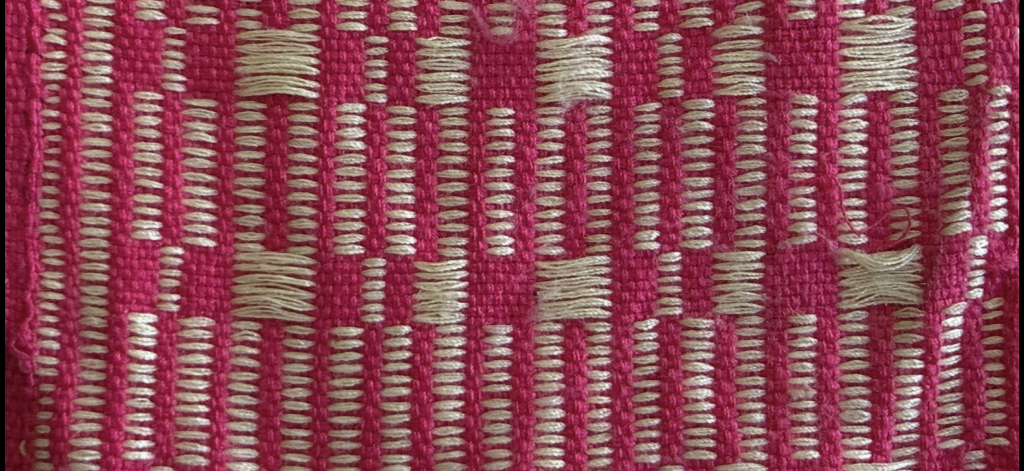
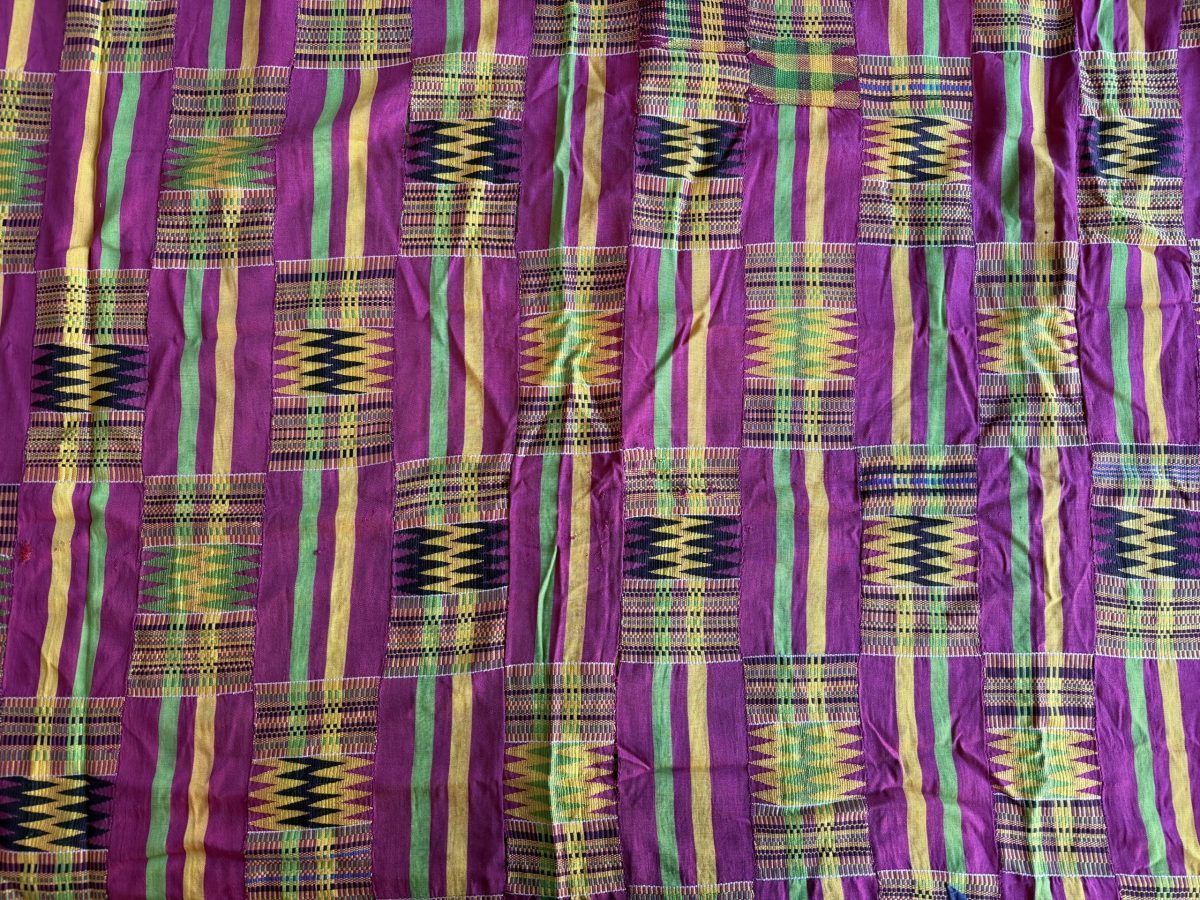
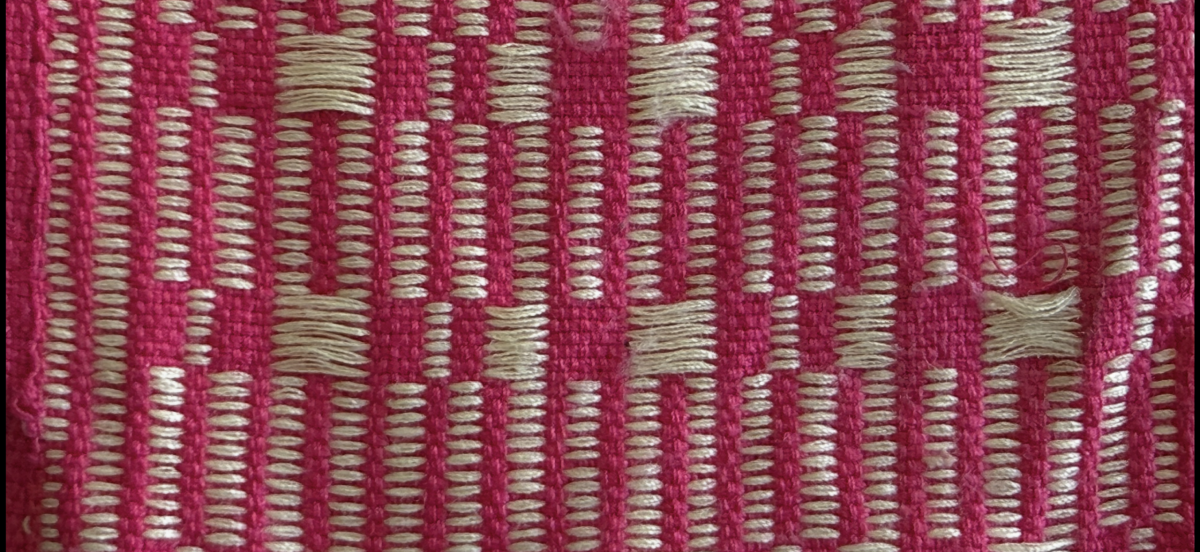
    Pink Kente

    The Grammar of Colour

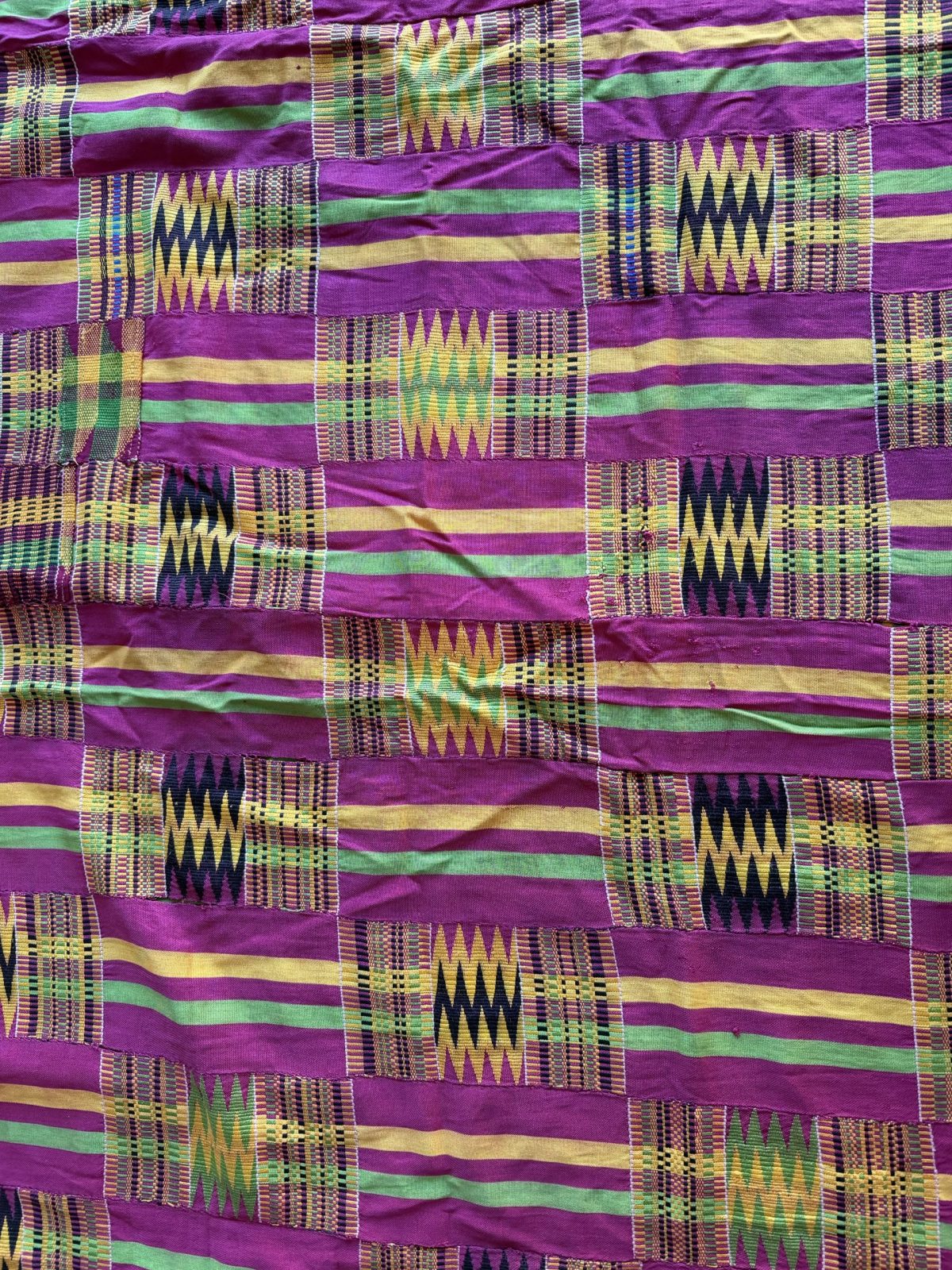
    The first element of Kente’s language is colour. In the Kente vocabulary developed by the Ewe and Ashanti weavers of Ghana, each colour carries a specific and culturally agreed meaning.

    Gold (and yellow): The colour of royalty, wealth, and moral authority. Gold in Kente does not simply represent material richness but the earned status that comes with wisdom, integrity, and service to the community. It is the colour of the Ashanti Golden Stool, the spiritual heart of the nation.

    Green: The colour of growth, renewal, and the living earth. Green represents fertility, both of the land and of the family, and carries associations with the agricultural rhythms that have always underpinned Ghanaian life.

    Black: Perhaps the most misunderstood colour in the Kente vocabulary for those unfamiliar with its tradition. Black does not signify mourning or negativity. It represents spiritual maturity, the wisdom of age, and the protective power of the ancestors.

    White: The colour of purity, healing, and the sacred. White is associated with the spiritual dimension of life, with cleansing ceremonies, and with the relationship between the human and the divine.

    Blue: Peace, harmony, and love. Blue in Kente carries the qualities of water, which in Ghanaian spiritual tradition is associated with life-giving force, with the smoothing of conflict, and with the deep bonds of family and community.

    Red: Used sparingly and deliberately, red carries the weight of political authority, sacrifice, and the blood of those who gave their lives for the community. It is a serious colour, deployed when the occasion demands acknowledgment of struggle, sacrifice, or the gravity of leadership.

    Silver: Associated with the moon, with serenity, and with purity in its cosmic dimension. Silver appears in Kente when the weaver wishes to invoke a quality that transcends the everyday.

    The Vocabulary of Pattern

    If colour is the vocabulary of Kente, pattern is its syntax. There are hundreds of distinct Kente patterns, each with a name, an origin, and a precise cultural meaning.

    Adweneasa is perhaps the most celebrated pattern in the Kente repertoire. Its name means “my skills are exhausted,” and it represents the pinnacle of a weaver’s technical achievement. A cloth woven in Adweneasa declares that the weaver has given everything they have. It is worn at moments of supreme achievement and is associated with the Ashanti royal court.

    Sika Futuro means “gold dust” and is associated with wealth, prosperity, and the moral quality of the person who has earned it honestly. It is often worn by leaders and successful people as a declaration of both material success and the integrity with which that success was achieved.

    Emaa Da, meaning “it has never happened before,” is a pattern reserved for unprecedented achievements and historic moments. It celebrates the first, the groundbreaking, the extraordinary. When Ghana achieved independence in 1957, Emaa Da was among the patterns worn to mark the occasion.

    Asasia is a royal pattern, reserved in tradition for chiefs and kings. Its geometric structure communicates the order and authority that good governance requires. To wear Asasia without royal entitlement was historically considered a serious transgression of social order.

    Oyokoman takes its name from the royal clan of the Ashanti and is associated with danger survived and safety restored, communicating the resilience of those who have faced adversity and come through it with their character intact.

    Kubi is associated with aristocratic leadership and the responsibilities of those in authority. It speaks of the obligation of the powerful to serve those they lead, embedding the ethics of governance into the very cloth worn by those who govern.

    The Occasion Speaks Through the Cloth

    Beyond colour and pattern, a third dimension of Kente’s language is occasion. The specific cloth worn to a naming ceremony is different from the one worn to a funeral. An experienced Ghanaian observer reads all three dimensions simultaneously: what colours have been chosen, what patterns woven, and what occasion is being marked.

    Understanding these dimensions of Kente’s language transforms the experience of seeing it. What might appear to an uninformed observer as a beautifully coloured cloth reveals itself as a specific and intentional act of communication, addressed to a community that knows how to read it.

    Why Learning the Language Matters

    There is a practical reason to learn Kente’s language, and a moral one. The practical reason is simple: understanding what you are wearing or displaying allows you to wear or display it appropriately. A pattern reserved for royalty worn casually to a party is not a neutral act.

    The moral reason is deeper. Kente has become a global phenomenon. If all those people engage with Kente purely as visual spectacle, admiring its surface while remaining ignorant of its depth, something important is lost. The culture is flattened. Its meaning is erased in the very act of its celebration.

    But if even a fraction of those millions take the time to learn something of what Kente means, genuine appreciation replaces superficial admiration. And the weavers of Ghana, who have invested their lives in the transmission of this knowledge, see that investment honoured in the way it was always meant to be: through understanding.

    Kente was designed to be read. It is time the world learned to read it.
  • Kente on the World Stage: From Ghanaian Villages to Global Runways and Red Carpets

    Kente on the World Stage: From Ghanaian Villages to Global Runways and Red Carpets

    When a cloth made in a village travels to the palaces of kings, the halls of power, and the runways of Paris, it carries with it an obligation: to be understood, not just admired.

    There is a photograph taken in 1957 that changed the world’s understanding of what a newly independent African nation could look like. Kwame Nkrumah, Ghana’s first prime minister and one of the twentieth century’s most visionary leaders, stands at the moment of his country’s independence draped in Kente. The cloth is white and gold, resplendent and deliberate. It is not a costume. It is a declaration. In choosing Kente for the defining moment of Ghana’s political birth, Nkrumah announced to the world that this nation would stand not just in freedom but in cultural dignity, rooted in something ancient and irreplaceable.

    That photograph is, in many ways, the beginning of Kente’s global journey. In the decades since, the cloth has travelled to places and appeared in contexts that its weavers in Bonwire and Kpetoe could scarcely have imagined. It has graced the runways of international fashion weeks. It has appeared on the shoulders of presidents and royalty. It has been worn by musicians at some of the world’s most watched performances.

    But with extraordinary visibility comes extraordinary responsibility. And that responsibility has not always been honoured.

    From Royal Courts to Global Diplomacy

    Long before the world’s cameras found it, Kente was already travelling. Ghana’s tradition of diplomatic gifting has always included Kente as its highest expression of honour and welcome. When foreign heads of state visit Ghana, they are presented with Kente. When Ghana sends ambassadors abroad, Kente travels with them as a statement of national identity.

    These diplomatic appearances established Kente’s identity in the international imagination not as folk craft or ethnic curiosity, but as the textile of a proud and sophisticated nation. The cloth built its global reputation through these cumulative acts of dignified presentation.

    Kente on the Runway: High Fashion’s Encounter with West Africa

    The fashion industry’s engagement with Kente has been complex, sometimes inspiring, and sometimes deeply problematic. From the late twentieth century onward, the visual vocabulary of Kente began appearing in the collections of international designers with increasing frequency.

    At its best, this engagement has brought authentic Kente to new audiences and created genuine economic partnerships between Ghanaian weavers and global fashion houses. Designers who commission genuine handwoven Kente for their collections, working directly with the weaving communities of Ghana, create a pipeline of economic value that reaches the artisans themselves.

    At its worst, the fashion world’s engagement with Kente has been straightforward appropriation: the visual aesthetics of the cloth reproduced without attribution, without payment to Ghanaian weavers, and without any acknowledgement of the cultural tradition being raided for inspiration. When a luxury brand sells garments with Kente-inspired prints for thousands of dollars while the weavers whose creative heritage inspired those prints see none of that revenue, something has gone profoundly wrong.

    Pop Culture and the Power of the Image

    Beyond high fashion, Kente has entered global pop culture through some of its most powerful channels. Musicians of African descent, particularly in the African American community, have used Kente as a conscious and deliberate symbol of cultural pride and political assertion.

    Film and television have also played a role. The global impact of Black Panther, which incorporated visual references to West African royal textile traditions including Kente, introduced an entire generation of global viewers to the aesthetic and symbolic power of African cloth. The resulting surge of interest in authentic African textiles was measurable and real.

    Political Kente: A Symbol of Solidarity

    In 2020, members of the United States Congress wore Kente stoles as they knelt in the Capitol building in solidarity with the Black Lives Matter movement. The gesture was widely photographed and widely debated. For many people of African descent, seeing Kente in one of the world’s most powerful legislative chambers was deeply moving.

    But the moment also generated important questions. Who had produced the Kente worn in that chamber? Were they authentic, handwoven cloths from Ghanaian weavers, or mass-produced imitations? Had any thought been given to ensuring that the economic benefit of that symbolic use flowed to the communities it was meant to honour? These questions were largely unanswered.

    The Responsibility That Comes with Visibility

    Kente’s global journey has been remarkable. But remarkable visibility without accountability is not a success story. It is an opportunity deferred. Every time Kente appears on a red carpet, a runway, a political stage, or a cultural platform without proper attribution, certification, and economic connection to its weavers, the opportunity is partially squandered.

    The Kente Registry is one of the most important tools available for ensuring that the next chapter of Kente’s global journey is written differently. By creating a verified record of authentic production and a certification system for genuine Kente, the Registry would give the weavers of Ghana something they have never had: a formal seat at the table of global conversations about their own cloth.

    Kente reached the world on the strength of its own beauty and meaning. It is time the world reached back, with something more than admiration. It is time for recognition, for accountability, and for a relationship built on genuine respect.

  • The Threat Is Real: How Counterfeit and Misappropriated Kente Harms Ghana

    The Threat Is Real: How Counterfeit and Misappropriated Kente Harms Ghana

    When a culture’s most sacred expression is reduced to a cheap imitation, the damage is not only economic. It is a wound to the soul of a people.

    Walk through any large market in West Africa, browse any online platform selling African-themed products, or visit the gift shop of a major international museum, and you will find it: fabric printed with Kente-inspired patterns, labelled boldly and sold confidently as Kente. It is colourful. It is eye-catching. It costs a fraction of what a genuine handwoven cloth would command. And it has nothing to do with Ghana, with the Ewe and Ashanti weavers who created this tradition, or with the centuries of cultural knowledge encoded in every authentic strip.

    This is not a minor inconvenience. It is not a harmless side effect of global admiration for a beautiful tradition. It is a form of cultural and economic harm that reaches deep into the lives of real people, the master weavers of Bonwire and Kpetoe and Adanwomase, and into the cultural foundations of an entire nation. The threat is real, it is ongoing, and it demands an urgent and structured response.

    The Scale of the Problem

    The market for Kente-inspired products is enormous and growing. As Kente’s global profile has risen, driven by its adoption in diaspora graduation ceremonies, its appearance in high fashion collections, and its celebration in popular culture, demand for products carrying its visual identity has expanded dramatically. The overwhelming majority of that demand is being met not by the weavers of Ghana, but by factories in Asia and elsewhere producing machine-made imitations at industrial scale.

    These products range from outright counterfeits, fabric marketed explicitly as Kente with no geographical qualification, to more subtle forms of misappropriation, where the patterns are reproduced under different names or described vaguely as African fabric, allowing sellers to benefit from Kente’s cultural cachet without making a claim they can be held to legally.

    The Economic Damage to Weavers and Communities

    For the weavers of Ghana, the economic consequences of this flood of imitation are direct and severe. Authentic handwoven Kente is labour-intensive to produce. A master weaver working on a complex cloth may spend several weeks completing a single commission, using skills acquired over years of dedicated apprenticeship. The resulting cloth commands a price reflective of that investment, as it should.

    But in a market saturated with machine-made alternatives selling for a fraction of that price, many consumers, particularly those outside Ghana who lack the knowledge to distinguish genuine from imitation, will naturally choose the cheaper option. A weaver in Bonwire cannot compete with a factory in Guangzhou on cost. The value of their work lies in its authenticity, its cultural depth, and its artisanal quality, none of which can be replicated by a machine.

    The communities built around Kente weaving are also affected. When the economic return on authentic Kente is suppressed by competition from imitations, young people may choose not to invest the years required to master the craft. The result, over time, is the erosion of the very tradition that makes the product worth imitating in the first place.

    The Cultural Damage: When Meaning Is Stripped Away

    The economic harm, significant as it is, may actually be less damaging in the long run than the cultural harm. Kente is not merely a textile. It is a language. Every pattern, every colour combination, every decision made by a weaver in the construction of an authentic cloth, carries meaning. That meaning is communal, historical, and in many cases sacred.

    When a machine-printed fabric reproduces the geometric patterns of Kente without any of the cultural knowledge that underlies them, something important is lost. The patterns are separated from their meanings. The cloth is reduced to its visual surface and stripped of its depth.

    More troubling still is what happens when specific patterns, some of which are reserved in Ghanaian tradition for royalty or specific ceremonial contexts, appear on mass-produced consumer goods without regard for their significance. A pattern that in its authentic context speaks of royal authority or sacred ritual, printed on a beach towel or a pair of shorts and sold in a tourist shop, is not simply misused. It is desecrated.

    The Threat to Cultural Transmission

    There is a third dimension of harm that receives less attention but may carry the gravest long-term consequences: the threat to the transmission of Kente knowledge from one generation to the next.

    The knowledge embedded in Kente weaving, the meanings of hundreds of patterns, the protocols governing their use, the techniques required to produce them, is not written down in a comprehensive archive. It lives primarily in the minds and hands of master weavers, many of whom are elderly. It is transmitted through apprenticeship, through the patient accumulation of skills and knowledge over years of close work with an experienced practitioner.

    When the economic incentives for entering the weaving tradition are undermined by market competition from imitations, the pipeline of knowledge transmission is threatened. Patterns that have been woven for centuries may eventually be woven by no one. The knowledge dies not with a dramatic rupture but with a quiet, gradual fading, noticed only when it is too late to reverse.

    Why a Formal Registry Is the Answer

    The solution to these interconnected forms of harm requires something more than goodwill and awareness. It requires structure. It requires a formal, legally grounded mechanism that can document what is authentic, certify who is qualified to produce it, and enforce the distinction in the marketplace. This is precisely what the Kente Registry is designed to provide.

    The threat to Kente is real and it is urgent. The knowledge held by the oldest master weavers will not wait indefinitely. The market dynamics that disadvantage authentic production will not self-correct. And the global appetite for Kente-inspired products will not diminish. The window for effective action is open, but it will not remain open forever.

    What is at stake is not a product. What is at stake is the living cultural heritage of an entire people. Ghana has everything to gain by protecting it, and everything to lose by waiting.

  • What Is a Geographical Indication (GI) and Why It Is a Game-Changer for Kente

    What Is a Geographical Indication (GI) and Why It Is a Game-Changer for Kente

    Some products are more than products. They are places. They are people. They are history. The law is finally catching up.

    There is a bottle of sparkling wine sitting on a shelf somewhere in the world right now. It is labelled Champagne. And because of that single word, the consumer holding it knows, with legal certainty, that what they are about to drink was produced in a specific region of northeastern France, according to methods refined over centuries, by producers bound to exacting standards of quality and tradition. That guarantee is not a marketing claim. It is the law. It is backed by one of the most powerful trade protection mechanisms in the international legal system: the Geographical Indication.

    Now consider a length of cloth sitting on a market stall somewhere in the world. It is labelled Kente. The consumer holding it has no such guarantee. That cloth may have been produced by an Ewe or Ashanti master weaver in Ghana, using techniques passed down through generations and patterns carrying centuries of cultural meaning. Or it may have been manufactured in a factory in Asia from cheap polyester, printed by machine in minutes, and shipped to market with no connection whatsoever to Ghana, to its people, or to the tradition it purports to represent.

    This is the gap that a Geographical Indication for Kente would close. And closing it would change everything.

    What a Geographical Indication Actually Is

    A Geographical Indication, or GI, is a form of intellectual property protection granted to products that have a specific geographical origin and whose quality, reputation, or other characteristics are essentially attributable to that origin. It is, at its core, a truth-telling mechanism built into trade law.

    The most familiar examples come from food and drink. Champagne can only come from Champagne, France. Parmigiano-Reggiano cheese can only be produced in specific provinces of northern Italy. Darjeeling tea must originate from the Darjeeling district of West Bengal, India. Roquefort cheese is protected to a single village in southern France. In each case, the GI ensures that the name on the label is a genuine and verifiable claim about origin.

    GIs are administered under the World Trade Organisation’s Agreement on Trade-Related Aspects of Intellectual Property Rights, known as TRIPS, which requires all member states to provide legal protection for geographical indications.

    Crucially, a GI does not create a monopoly in the traditional sense. It does not prevent anyone from making a similar product. What it prevents is the use of the protected name for products that do not meet the geographical and qualitative criteria. A sparkling wine producer in South Africa can make excellent wine using the same method as Champagne producers. They simply cannot call it Champagne. The name belongs to the place.

    Why Kente Is a Perfect Candidate for GI Status

    Kente meets every criterion for Geographical Indication protection, and meets them with extraordinary clarity.

    It has a specific and well-documented geographical origin. Kente is produced by the Ewe people of the Volta Region and the Ashanti people of the Ashanti Region of Ghana. The primary weaving communities, including Bonwire, Adanwomase, Kpetoe, and Agotime, are established centres of a tradition that has existed in these locations for centuries.

    Its qualities are entirely attributable to its origin. The specific patterns of Kente, their names, their meanings, and the protocols governing their use, are products of Ghanaian cultural and social history. They cannot be replicated elsewhere because the knowledge that generates them exists only within the communities that developed them.

    There is established reputation and global recognition. Kente is not an obscure regional craft. It is one of the most recognised textiles on earth. That recognition, built over decades of export, diplomatic gifting, diaspora adoption, and cultural celebration, is precisely what makes GI protection both necessary and viable.

    The Economic Transformation GI Status Would Bring

    The economic case for a Kente GI is as compelling as the cultural one. When a product carries verified GI status, it commands a premium in the marketplace. Consumers who value authenticity, and there are millions of them globally, will pay more for the real thing when they can be certain they are getting it. Studies of GI-protected products in Europe consistently show price premiums ranging from twenty to three hundred percent compared to unprotected equivalents.

    For the weavers of Bonwire and Kpetoe, this premium would be transformative. These are skilled artisans producing culturally irreplaceable work, yet competing in a market flooded with machine-made imitations that undercut their prices dramatically. A GI would not just protect their market position. It would actively strengthen it.

    What Stands Between Kente and GI Protection

    The path to GI status for Kente is achievable but requires deliberate effort. A successful GI application requires documentation of the product’s geographical origin, production methods, and quality standards. It requires the establishment of a body capable of certifying compliance, monitoring the market, and enforcing the designation. And it requires political will at the governmental level.

    This is where the Kente Registry becomes indispensable. The Registry, by creating a comprehensive and authoritative record of Kente patterns, weaving communities, production standards, and cultural meanings, would provide exactly the documentation base that a GI application requires.

    A Model for African Cultural Heritage

    What makes the Kente GI project significant beyond Ghana’s borders is the model it would establish for the rest of Africa. The continent is home to an extraordinary wealth of distinctive cultural products, from Ethiopian hand-woven textiles to Malian bogolan mud cloth, from Moroccan argan oil to South African rooibos tea, many of which remain inadequately protected against misappropriation and imitation.

    A successful Kente GI, pursued rigorously and defended effectively, would demonstrate that African cultural products can achieve the same level of international legal protection as European wines and cheeses. It would signal to the global trade community that Africa takes the value of its heritage seriously and has the institutional infrastructure to back that claim.

    A Geographical Indication for Kente would not merely be a legal designation. It would be a declaration, backed by international law, that what the weavers of Ghana have created belongs to them, is irreplaceable, and deserves the protection the world has long afforded the products it truly values.

  • The Unsung Heroes: Meet the Weavers Behind the World’s Most Iconic Fabric

    The Unsung Heroes: Meet the Weavers Behind the World’s Most Iconic Fabric

    They did not weave to be remembered. They wove because it was right, because it was true, because their people needed it.

    There is a man sitting at a loom in Bonwire, Ghana. He is not young. His hands move with the unhurried certainty of someone who has performed this motion ten thousand times before, and who knows he will perform it ten thousand times again. He does not look up when visitors pass. He does not pause to explain what he is doing or why. The work is its own explanation. The cloth growing beneath his hands has been growing, in one form or another, for centuries. He is simply the latest in a line so long it disappears into the mist of Ghanaian antiquity.

    This man is a Kente weaver. And in all likelihood, you have never heard his name.

    That is not an accident. It is, in many ways, a reflection of how the weavers themselves have always understood their role. From the earliest days of Kente’s history among the Ewe and Ashanti people of Ghana, the weavers who created this magnificent textile did not position themselves as artists seeking recognition. They positioned themselves as servants of something larger: their communities, their traditions, their ancestors, and their God. The cloth was the point. The weaver was the instrument.

    But we live in a different age now. And that difference carries with it a responsibility we have not yet fully accepted.

    Ancient Hands, Ancient Humility

    The story of Kente weaving as told by Ashanti oral tradition begins not with a master craftsman announcing his genius to the world, but with two young men watching a spider. Observing the web of Anansi with quiet attention, they attempted to replicate its structure using fibres from a palm tree. What they created, they brought not to a market to sell, but to their king, Asantehene Osei Tutu I, as an offering. They did not seek fame. They sought to honour.

    This founding act of humility set the tone for everything that followed. For generations upon generations, Kente weavers in the communities of Bonwire and Adanwomase in the Ashanti Region, and in the Ewe weaving towns of Kpetoe and Agotime in the Volta Region, have practised their craft with the same quiet devotion. They learned at their fathers’ feet, or their uncles’, sitting beside the narrow-band loom as children, learning to read the patterns before they could produce them, memorising meanings before their hands were strong enough to weave.

    The Weight of What They Carry

    To appreciate what these weavers do, it is important to understand the technical and intellectual demands of the craft. Kente weaving is not simple work. It is not the kind of skill acquired in a weekend course or mastered through casual repetition. It is a discipline that demands years of dedicated study, an encyclopaedic knowledge of hundreds of distinct patterns and their meanings, and a physical dexterity that must be built slowly and maintained constantly.

    The traditional narrow-band loom on which Kente is woven produces strips of cloth roughly four inches wide. These strips are then cut and sewn together with extraordinary precision to create the full cloth, ensuring that patterns align perfectly across every seam. A master weaver working on a complex commission may spend weeks on a single cloth, holding in their mind simultaneously the full visual design, the symbolic meaning of each section, and the technical requirements of the loom.

    The patterns themselves are a form of intellectual property, passed down through lineages with the same care as land or gold. Some patterns belong to specific families and may only be woven by their members. Others are reserved for royalty and may only be commissioned by chiefs and kings. A weaver who produces a reserved pattern without authorisation does not simply make a mistake. They commit a cultural transgression.

    What Has Changed, and What It Demands of Us

    For most of Kente’s history, the invisibility of the weaver was simply the way things were. Information moved slowly. Communities were smaller. The weaver was known in their village, respected in their town, honoured by the chiefs who commissioned their work. That local recognition, though it never extended to global fame, was sufficient within its context.

    That context has changed completely. We live now in a world of unprecedented connectivity. A photograph taken in Bonwire this morning can be seen in London, Lagos, and Los Angeles before nightfall. The same global visibility that has allowed Kente to become one of the most recognised textiles on earth has also created a profound imbalance. The cloth is celebrated everywhere. The people who make it are celebrated almost nowhere.

    Exercising Good Judgment: How to Honour the Weavers

    Name them. When Kente is featured in a publication, a fashion spread, an academic paper, or a social media post, name the weaving community it came from. Name the town. If possible, name the weaver. A cloth attributed to its source is a cloth that carries dignity.

    Seek out authentic work. Every purchase of genuine, handwoven Kente from an Ewe or Ashanti weaver is a vote cast for the continuation of the tradition. Every purchase of a machine-made imitation is a vote cast against it.

    Amplify their stories. The weavers of Bonwire and Kpetoe and Adanwomase have stories worth telling. There are elderly masters who carry in their minds patterns that exist nowhere else. There are young weavers who have chosen the loom over other paths, committing to a tradition that the modern world constantly tempts them to abandon.

    Support institutional recognition. The Kente Registry and similar initiatives represent the kind of structural change that can embed the weavers’ contribution into the legal and cultural record permanently.

    The Loom Is Still Running

    Somewhere in Ghana right now, a Kente weaver is at work. The shuttle moves. The patterns accumulate, strip by strip, colour by colour, meaning by meaning. The cloth that will emerge from that loom will go on to mark a birth, or a marriage, or a funeral, or a graduation. It will be photographed and admired and worn with pride. It will travel, perhaps, to another continent entirely, where someone will see it and feel something stir in them, some recognition of beauty and depth that transcends the distance between where they stand and where it was made.

    The weaver will not be in that photograph. Their name will likely not appear in the caption. But their hands will be in every thread, their knowledge in every pattern, their devotion in every colour.

    It is time the world learned to see them. The greatest artistry is often the quietest. The Kente weavers of Ghana have known this for centuries. Now it is our turn to know it too.

  • Kente Beyond the Cloth: Understanding Its Cultural Significance

    Kente Beyond the Cloth: Understanding Its Cultural Significance

    In Ghana, Kente is not worn. It is spoken. It is not fabric. It is a declaration.

    Ask any Ghanaian what Kente means to them, and you will rarely receive a simple answer. They may speak of their grandmother draping it across her shoulder at a funeral, of the pride that swelled in their chest the first time they wore it to a naming ceremony, of the way it transforms an ordinary person into something ceremonial, something seen and recognised by the world. Kente, the hand-woven masterpiece of the Ewe and Ashanti people of Ghana, is one of the few objects on earth that carries within its threads an entire civilisation’s understanding of beauty, meaning, and belonging.

    To speak of Kente as fabric alone is to miss the point entirely. Thread and loom are merely the medium. The message is something far older, far richer, and far more alive than any single garment could contain. Kente is identity. It is communication. It is the language that Ghanaians speak when words are insufficient for the gravity of a moment. It is present at the beginning of life and at the end of it, at the height of joy and in the depths of mourning, at royal courts and at village squares. It belongs to everyone and is sacred in its own right.

    A Living Language Woven in Thread

    The most important thing to understand about Kente is that it is not decorative. Every element of a Kente cloth, from the colours chosen to the geometric patterns selected, carries deliberate meaning. The Ewe and Ashanti weavers who produce it are not simply craftspeople. They are communicators. They are historians and philosophers, encoding in each strip of cloth the wisdom, values, and spiritual convictions of their people.

    Each colour in the Kente vocabulary tells a story. Gold speaks of royalty, wealth, and the moral authority that comes with earned achievement. Green carries the energy of renewal, of the earth’s abundance, of growth and fertility. Black, far from being a colour of mourning in the Western sense, represents spiritual maturity, the power of the ancestors, and the deep intelligence that comes with age. White signifies purity, healing, and the sacred. Blue speaks of peace, harmony, and the love that holds communities together. Red, used sparingly, carries the weight of political authority, sacrifice, and the blood of those who came before.

    The patterns, too, are a vocabulary. There are hundreds of distinct Kente designs, each with a name drawn from proverbs, historical events, or philosophical ideals. Adweneasa, meaning my skills are exhausted, is a pattern of such complexity that a weaver declares it a summit of their craft. Emaa Da celebrates the unprecedented, the moment that has never happened before. Sika Futuro, gold dust, celebrates wealth earned with integrity. To wear any of these is not to make a fashion choice. It is to make a statement, and every Ghanaian who sees it reads that statement fluently.

    The Companion of Every Occasion

    What distinguishes Kente from the ceremonial textiles of other cultures is its remarkable range. It does not belong exclusively to one kind of moment. It is not reserved only for the sacred, nor confined to celebration. In Ghana, Kente is the chosen companion for the full breadth of human experience, moving effortlessly between the secular and the sacred, the joyful and the solemn, the intimate and the communal.

    At birth, a newborn enters the world wrapped in the knowledge of their heritage. The outdooring ceremony, held seven days after birth, is the moment a child is formally introduced to the world. Kente is present. Family members wear it to honour the new life. The colours chosen reflect the hopes held for the child, the prayers offered to the ancestors for their protection.

    At marriage, Kente becomes one of the most powerful visual symbols of union. A bride and groom dressed in Kente are not simply dressed beautifully. They are declaring before their community, their ancestors, and their God that this union is serious, honoured, and rooted in something larger than themselves.

    At funerals, Kente serves as a bridge between the living and the departed. Contrary to what outsiders might expect, funerals in Ghana are often vibrant, elaborate celebrations of a life fully lived. The specific Kente worn at a funeral is selected with great care, communicating the status of the deceased, the grief of the bereaved, and the community’s affirmation that death is not the end but a transition into the company of the ancestors.

    At enstoolments and royal ceremonies, Kente reaches its most regal expression. When a chief or king is enstooled, Kente is inseparable from the occasion. The specific patterns worn by royalty are reserved, communicating authority that is not merely political but spiritual.

    At graduations and civic celebrations, Kente speaks of pride and achievement. Across Ghana and throughout the African diaspora, graduates drape Kente across their academic gowns as a declaration that their success is not only personal but ancestral, earned on the shoulders of those who came before them and offered forward to those who will come after.

    What Kente Means to Ghana as a Whole

    For Ghanaians, Kente is not a relic of the past. It is not something to be preserved behind glass in a museum while modern life moves on without it. It is alive. It evolves. New patterns are created by master weavers to mark new chapters in the nation’s history. When Ghana achieved independence in 1957, the occasion was marked in Kente. When Ghana hosts heads of state, dignitaries and presidents are presented with Kente as the highest expression of welcome and honour.

    For the Ewe and Ashanti people in particular, Kente is inseparable from identity. The Ashanti, whose royal court in Kumasi gave Kente its first formal expression, see it as a living connection to the Golden Stool, the spiritual heart of the nation. The Ewe, whose distinctive weaving tradition produces patterns of extraordinary complexity, bring to Kente a philosophy of the cosmos expressed in geometric form.

    Across the wider Ghanaian community, regardless of ethnicity or region, Kente has become a shared national symbol, one that unites people across lines of language, religion, and geography. A Ga person wearing Kente at a celebration is making the same declaration as an Ashanti elder wearing it at a durbar: I am Ghanaian. I carry this history with pride. I am part of something that stretches back further than I can see and forward further than I can imagine.

    Sacred Threads in a Secular World

    One of the most remarkable qualities of Kente is its capacity to hold both the sacred and the secular without contradiction. In a world that often insists on separating the spiritual from the everyday, Kente refuses the distinction. It is as comfortable in a church as it is at a naming ceremony. It is as appropriate at a political rally as it is at a queen mother’s court.

    This is because, for the Ghanaian worldview from which Kente emerges, the sacred and the secular are not opposites. They are dimensions of the same reality. The ancestors are not distant figures consigned to another realm. They are present participants in the life of the community, honoured at every significant moment. When Kente is worn, the ancestors are acknowledged.

    A Thread That Cannot Be Broken

    To understand Kente is to understand something essential about Ghana and its people: that beauty and meaning are not luxuries but necessities, that the past is not behind them but beneath them, holding them up, and that every significant moment in a human life deserves to be marked with intention and dignity.

    Kente is not worn carelessly. It is not chosen without thought. When a Ghanaian reaches for Kente, they are reaching for something that their grandparents reached for, and their grandparents before them. They are participating in an unbroken act of cultural transmission that has persisted through colonialism, migration, globalisation, and the relentless pressure of a world that often asks people to leave their traditions at the door of modernity.

    Ghana has refused. The Ewe and Ashanti weavers of Bonwire and Kpetoe and the great weaving communities across the country have refused. They sit at their looms and they weave. They pass their knowledge to their children. They create new patterns for new times while honouring the depth of what came before. And with every strip of cloth produced, they send the same message forward into the future: we are still here. Our culture is still alive. And it is beautiful.

    Kente does not simply clothe the body. It clothes the soul, the story, and the nation. That is why Ghana wears it with such pride, and why the world cannot look away.

  • What Is the Kente Registry, and Why the World Needs It

    What Is the Kente Registry, and Why the World Needs It

    Heritage. Identity. Honour. Recognition. These are not just words; they are the threads from which civilisations are woven.

    There is a cloth so vivid, so deliberate in its geometry, so layered in meaning, that wearing it has always been an act of communication. Kente, the resplendent hand-woven textile of the Ewe and Ashanti people of Ghana, does not simply drape the body. It speaks. Each colour declares an emotion or a truth: gold for royalty and wealth, green for renewal and growth, black for maturity and the spiritual energy of the ancestors, white for purity and purification. Every pattern carries a name, a proverb, a story reaching back centuries. To wear Kente is to wear history.

    But history, when left unguarded, can be stolen, diluted, or forgotten.

    This is precisely why the world needs the Kente Registry: a formal, structured, and globally recognised repository that documents, protects, and celebrates every pattern, weave, colour combination, and cultural meaning of Kente cloth. It is not merely an archival project. It is an act of justice. It is a declaration that African culture deserves the same institutional seriousness, legal protection, and global respect afforded to the artistic and intellectual traditions of other civilisations.

    A Cloth Born of Royalty

    To understand why the Kente Registry matters, you must first understand what Kente is.

    According to Ashanti oral tradition, the art of Kente weaving was inspired by a spider’s web. Two young men from Bonwire, a small town in the Ashanti Region of Ghana, observed the spider Anansi weaving its intricate web and attempted to replicate the pattern using fibres from a palm tree. What began as imitation became innovation. They brought their creation before Asantehene Osei Tutu I, the first king of the Ashanti Empire, and Kente was born as a royal cloth, worn exclusively by kings and their courts.

    Over time, Kente evolved from royal exclusivity to cultural identity, but it never lost its ceremonial weight. It is worn at the most significant moments of life: births, outdoorings, puberty rites, weddings, graduations, funerals, and the enstoolment of chiefs. Each occasion calls for a specific pattern. A cloth worn to celebrate a new life is different from one worn to honour the dead. This is not aesthetics. This is a living language.

    There are hundreds of distinct Kente patterns, each with a unique name and meaning. Sika Futuro means “gold dust” and symbolises wealth and prestige. Emaa Da, meaning “it has not happened before,” celebrates unprecedented achievement. Asasia is reserved for royalty. Adweneasa, meaning “my skills are exhausted,” represents the highest level of craftsmanship a weaver can achieve. These are not decorative choices. They are philosophical statements encoded in thread.

    The Crisis of Cultural Erosion

    Here is where the urgency lies: this extraordinary body of knowledge is under threat.

    Mass production has flooded global markets with machine-made imitations of Kente: cheap polyester prints that mimic the visual aesthetics of the cloth while stripping it of every ounce of meaning. These imitations are manufactured in factories far from Ghana, often without the knowledge or consent of Ewe and Ashanti weavers, and sold at scale to consumers who are never told the difference. To the untrained eye, they look similar. To a Ghanaian elder, they are a desecration.

    This is cultural appropriation in its most commercially aggressive form. And it has real consequences. The artisans of Bonwire and Adanwomase, the historic weaving towns of the Ashanti Region, who spend years mastering their craft, who inherit techniques passed down through generations of family knowledge, find themselves unable to compete economically with factories producing pale imitations at a fraction of the cost. The financial and spiritual injury is compounded: their heritage is being sold back to the world without attribution, without royalty, and without respect.

    Meanwhile, documentation of authentic Kente patterns remains fragmented. Knowledge lives primarily in the memories of master weavers, some of whom are elderly. When a master weaver dies without having passed on the full meaning and technique of a rare pattern, that knowledge dies with them. Entire chapters of a civilisation’s creative history vanish quietly, with no obituary and no record.

    What the Kente Registry Would Do

    The Kente Registry would be a comprehensive, authoritative, and legally grounded institution with several interconnected purposes.

    Documentation and Preservation. Every known Kente pattern would be catalogued with its name, its region of origin, its cultural meaning, its appropriate ceremonial context, and the weaving technique required to produce it. This would be done in collaboration with master weavers, chiefs, historians, and cultural custodians, not imposed from outside, but co-created by those who hold the knowledge. The result would be an irreplaceable archive, accessible to researchers, educators, designers, and future generations of Ewe and Ashanti weavers.

    Intellectual Property Protection. Drawing on frameworks like Geographical Indications, the same legal tools that protect Champagne from France, Parmigiano-Reggiano from Italy, and Darjeeling tea from India, the Registry would establish that authentic Kente can only be described as such when produced by certified weavers using traditional methods in the regions of origin. This would not prevent the world from admiring or being inspired by Kente. It would simply ensure that authentic Kente is identifiable as such, and that imitations cannot masquerade as the real thing without legal consequence.

    Economic Empowerment of Artisans. Certification would carry commercial value. Consumers who wish to purchase genuine Kente would know how to identify it. Institutions including universities, governments, fashion houses and designers, seeking to incorporate authentic Kente into their work would have a transparent, accountable pathway to do so in partnership with Ghanaian weavers rather than at their expense. This is not a closed system. It is a fair one.

    Education and Global Awareness. The Registry would serve as an educational resource, helping the world understand what it is actually seeing when it sees Kente. In recent decades, the cloth has appeared at graduation ceremonies across the diaspora, in high fashion collections, in music videos, in political ceremonies. This visibility is a testament to Kente’s power. But visibility without understanding can collapse into spectacle. Education transforms spectacle into genuine appreciation, and genuine appreciation is what sustains a living culture.

    Honour and the African Diaspora

    The Kente Registry carries particular significance for the African diaspora.

    For millions of people of African descent across the Americas, the Caribbean, Europe, and beyond, whose connection to their ancestral cultures was brutally severed by the transatlantic slave trade, Kente has served as a symbolic thread of reconnection. African American students have draped it across their graduation gowns for decades. Activists and artists have worn it as an emblem of pride and resistance. Politicians have wrapped themselves in it as a gesture of solidarity with African heritage.

    This adoption of Kente by the diaspora is deeply moving. It reflects a hunger for rootedness, for belonging, for a tangible link to something that survived the devastation of history. The Kente Registry would honour that hunger by ensuring that what the diaspora reaches for is real: the cloth representing their reconnection to Africa is not a factory-produced simulacrum, but a genuine article made by the hands of Ghanaian artisans carrying forward an unbroken tradition.

    In this sense, the Registry is not just a Ghanaian project. It is a global African project. It is a gift to every person of African heritage who has ever looked at a strip of interwoven colour and felt something ancient stir within them.

    Why the World Needs It

    The world needs the Kente Registry for the same reason it needs every institution that insists on truth in the face of erasure.

    We live in an era of unprecedented cultural exchange and unprecedented cultural exploitation. The mechanisms that allow a corporation to trademark a pattern it did not create, manufacture a cloth it does not understand, and profit from a meaning it never possessed are sophisticated and entrenched. The mechanisms that allow communities like the Ewe and Ashanti weavers of Ghana to protect and profit from their own heritage are comparatively weak. The Kente Registry would begin to correct that imbalance.

    It would also model something important for the world: that heritage is not sentimentality. Heritage is knowledge. Heritage is intellectual property. Heritage is the accumulated wisdom of generations of creative, spiritual, and philosophical labour. It deserves the same protection, the same documentation, and the same institutional respect as any other form of human achievement.

    The Kente cloth has survived centuries of colonialism, cultural suppression, and commercial exploitation. It has crossed oceans. It has wrapped the shoulders of kings and activists and graduates and grandmothers. It has spoken when words were not enough.

    The least the world can do is listen carefully and build the institutions that ensure it keeps speaking for centuries to come.

    The Kente Registry is not just about cloth. It is about who gets to tell their own story, in their own words, on their own terms. It is time.