
Board of Directors · Kente Registry Limited
Dr Senyo Kwaku Agbeblewu
Director
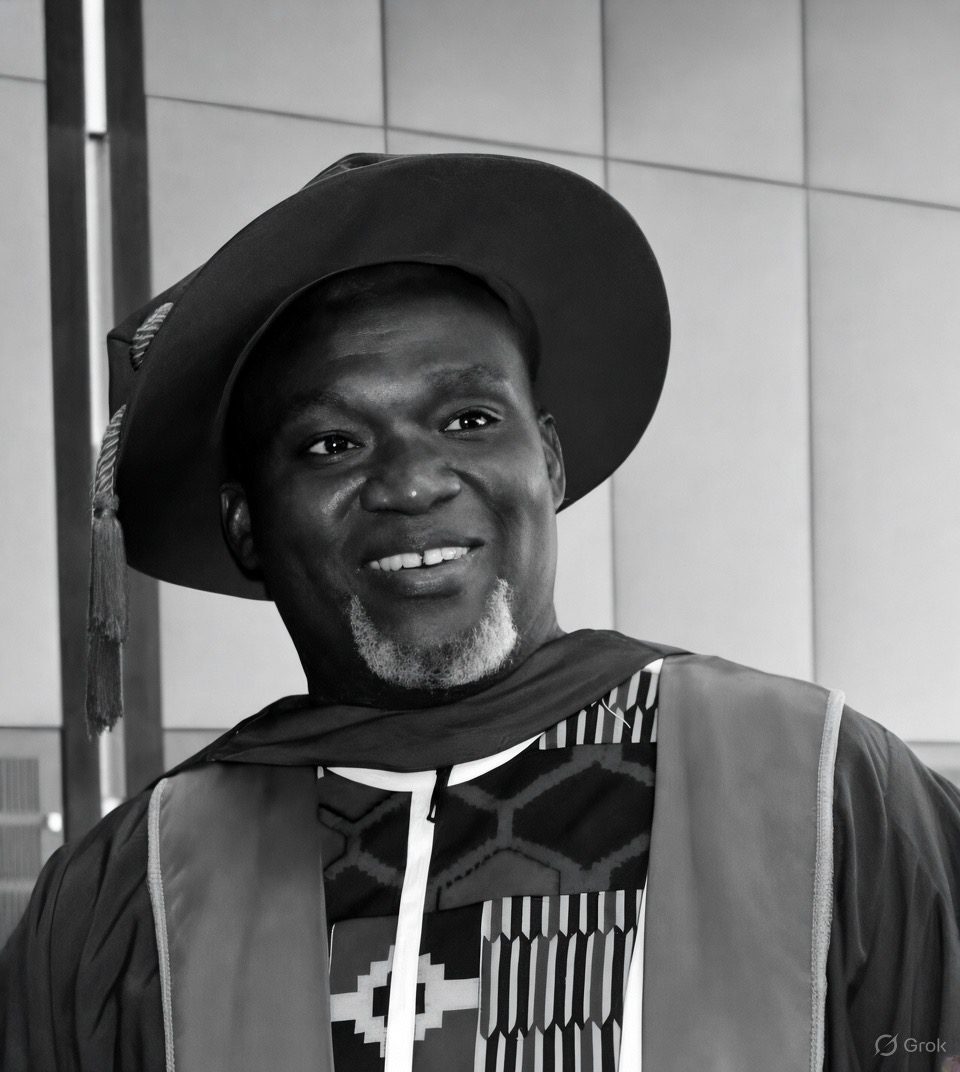
Dr Senyo Kwaku Agbeblewu studies why people act entrepreneurially and what keeps them contributing. As a founding Director, he brings that evidence to a Registry that depends entirely on weavers choosing to take part.
At a glance
- PhD in Management and Commerce, Edith Cowan University
- More than ten years teaching at the Centre for Entrepreneurship and Small Enterprise Development, University of Cape Coast
- Postgraduate research supervisor, University of Cape Coast
- Research: entrepreneurship, AI adoption in small business, participation in crowdsourcing, inclusive enterprise
Entrepreneurship and small enterprise
Dr Agbeblewu is an entrepreneurship scholar and educator, and one of the founding Directors of Kente Registry Limited. His work asks what leads people to act entrepreneurially: to start ventures, nurture them, and stay resilient long enough to see them succeed. His most recent research looks at how entrepreneurs’ adoption of artificial intelligence is changing the fortunes of small and medium-sized enterprises.
For more than a decade he taught at the Centre for Entrepreneurship and Small Enterprise Development, a department of the School of Business at the University of Cape Coast in Ghana. His work there centred on entrepreneurial capability, innovation and the growth of small enterprises. Although now resident in Australia, he continues to supervise postgraduate research at the University.
What makes people take part
Dr Agbeblewu holds a PhD in Management and Commerce from the School of Business and Law at Edith Cowan University, Western Australia. His doctoral research examined how the design of work, and of digital platforms, shapes motivation and participation in crowdsourcing.
Drawing on evidence from contributors across leading crowdsourcing platforms, he found that people gain real psychological satisfaction from tasks and platforms that support three things: autonomy, competence and relatedness. Where those are present, contributors respond willingly to invitations to solve problems.
These qualities are not incidental. They decide whether people contribute at all. Systems that provide them sustain participation; systems that overlook them limit it, however well engineered.
Why it matters to the Registry
A register of Kente weavers and cloths can only be as complete as the weavers, families and field officers who choose to take part. No technical design can compel that choice. Dr Agbeblewu brings an evidence-based understanding of what earns participation, and of what quietly discourages it.
The three conditions map closely onto the Registry’s own commitments. Autonomy is the weaver’s free, prior and informed consent, including the right to withdraw it. Competence is recognising the weaver as the expert whose knowledge is being recorded. Relatedness is attribution to the weaver, their family and their tradition.
His wider interests span entrepreneurship, creativity, innovation, sustainability, technology adoption and inclusive enterprise development. He takes a people-centred view of digital systems: they should be efficient, but they should also treat contributors with respect and return value contributors can recognise as their own. That view suits an organisation whose subject is craftsmanship rather than data, and whose contributors hold the knowledge being recorded.
On the board
Having worked in Ghanaian higher education and now living in Australia, Dr Agbeblewu knows both settings the Registry works across. One is the weaving communities whose knowledge it exists to preserve. The other is the governance and standards environment in which an Australian company limited by guarantee must operate.
As a Director, he contributes academic rigour, entrepreneurial judgement, and a practical interest in how the Registry’s commitments to consent, accuracy and long-term stewardship are carried out in the field, not merely stated on paper.